When contemplating grazers on a coral reef, adorable little sheep probably do not leap into your imagination. Yet, there are exotic creatures that do exactly that: graze on sunlight. Some species of gill-less sea slugs, Costasiella kuroshimae, even look disarmingly similar to a tiny sheep.
These charming little slugs measure only about 5 millimetres and live on green Avrainvillea and Halimeda algae. Mind you, they are so tiny that they are far from being readily obvious. You need to know their environment and where to look. Their nickname, ‘leaf sheep’, attributes to its dark eyes and two rhinophores that stick out from the top of its head, resembling sheep ears. The leaf-like protrusions on its back, called cerata, aid in breathing. As noted in chapter 7 of Coral Triangle Cameos, these tiny exotica are also fondly known as ‘Shaun the Sheep’, after the popular animated character.
What truly makes these species of marine slugs special is their ability to perform kleptoplasty — a process in which an animal stores chloroplasts from plant cells and reuses them to derive energy from photosynthesis. In the bright, clear waters of coral reefs, these chloroplasts remain active and can maintain this process of producing energy through photosynthesis for weeks—one of nature’s smartest energy hacks.
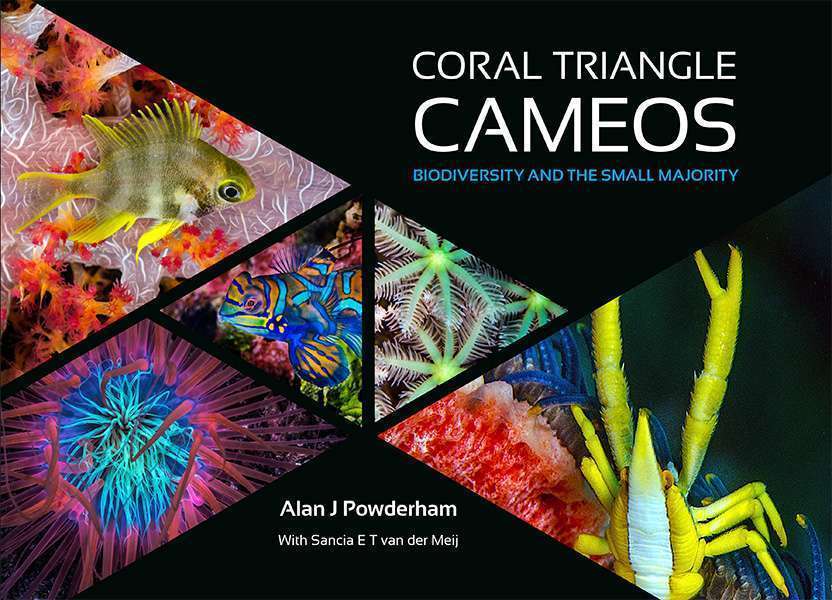
Coral Triangle Cameos
In the photo book Coral Triangle Cameos: Biodiversity and the Small Majority by marine biologist Sancia van der Meij and photographer Alan Powderham, the smallest fish and invertebrates from the Coral Triangle are central. These tiny inhabitants not only contribute enormously to the diversity of coral reefs, but the relationships between species also provide a good picture of the creative excesses of evolution.
The book is available through (online) bookstores or from Dived Up Publications. ISBN 978-1-909455-57-3