Posted on Leave a comment

Discover the Maldives: New Editions and Essential Guides for 2026

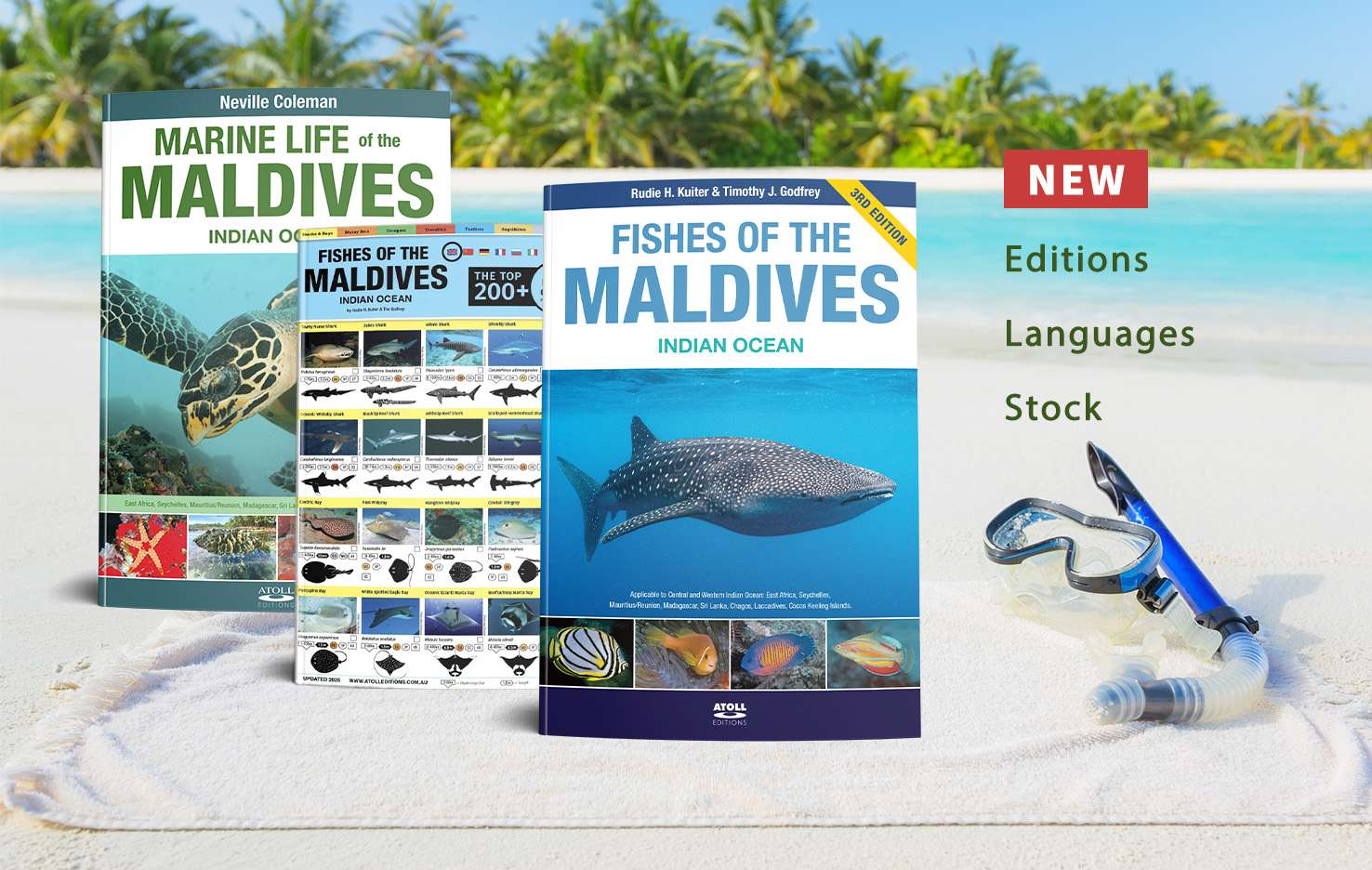
New Maldives marine life books

Whether you are planning your next trip to the atolls or are a passionate marine enthusiast looking to expand your reference library, we are thrilled to announce some major updates to our Maldives collection. With the release of two highly anticipated third editions and the return of an essential classic, identifying and understanding the vibrant life of the Indian Ocean has never been easier.

The Main Event: Fishes of the Maldives – Indian Ocean (3rd Edition)
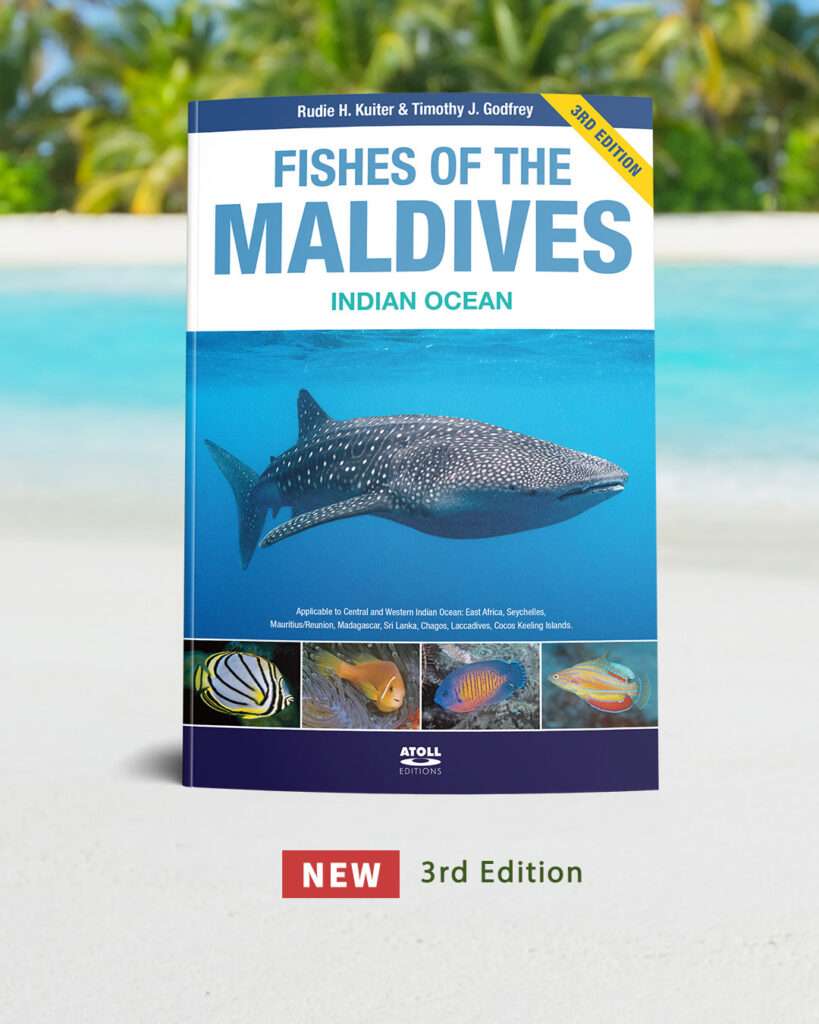
Our definitive identification guide by Rudie H. Kuiter and Tim Godfrey has just been updated for 2026. Featuring over 1,130 colour photographs, this new edition uses an innovative layout to allow for quick and easy retrieval of species. It incorporates the latest IUCN Red List updates, recent classification changes, and newly added sharks and rays, making it an indispensable resource for both recreational divers and marine researchers.

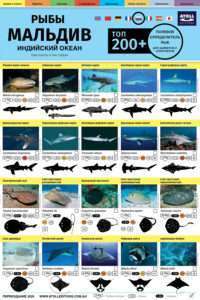
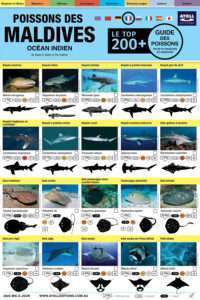
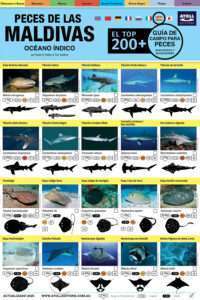
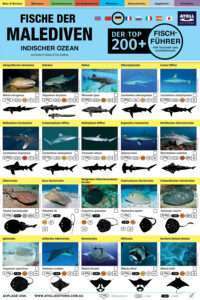
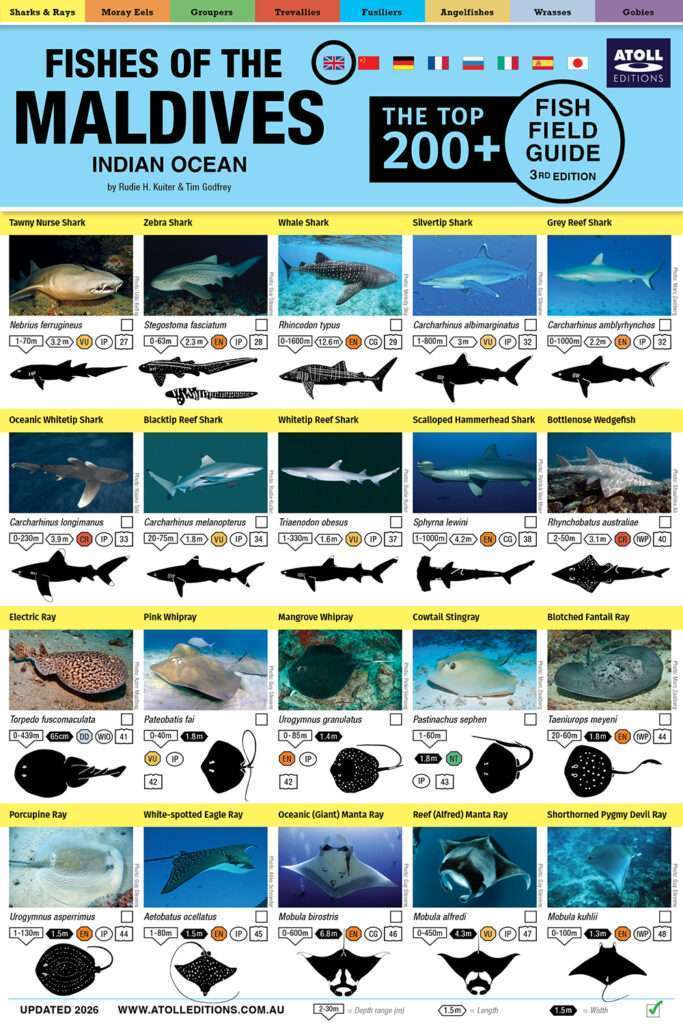
The Perfect Companion: Maldives Fish Field Guide “Top 200+”
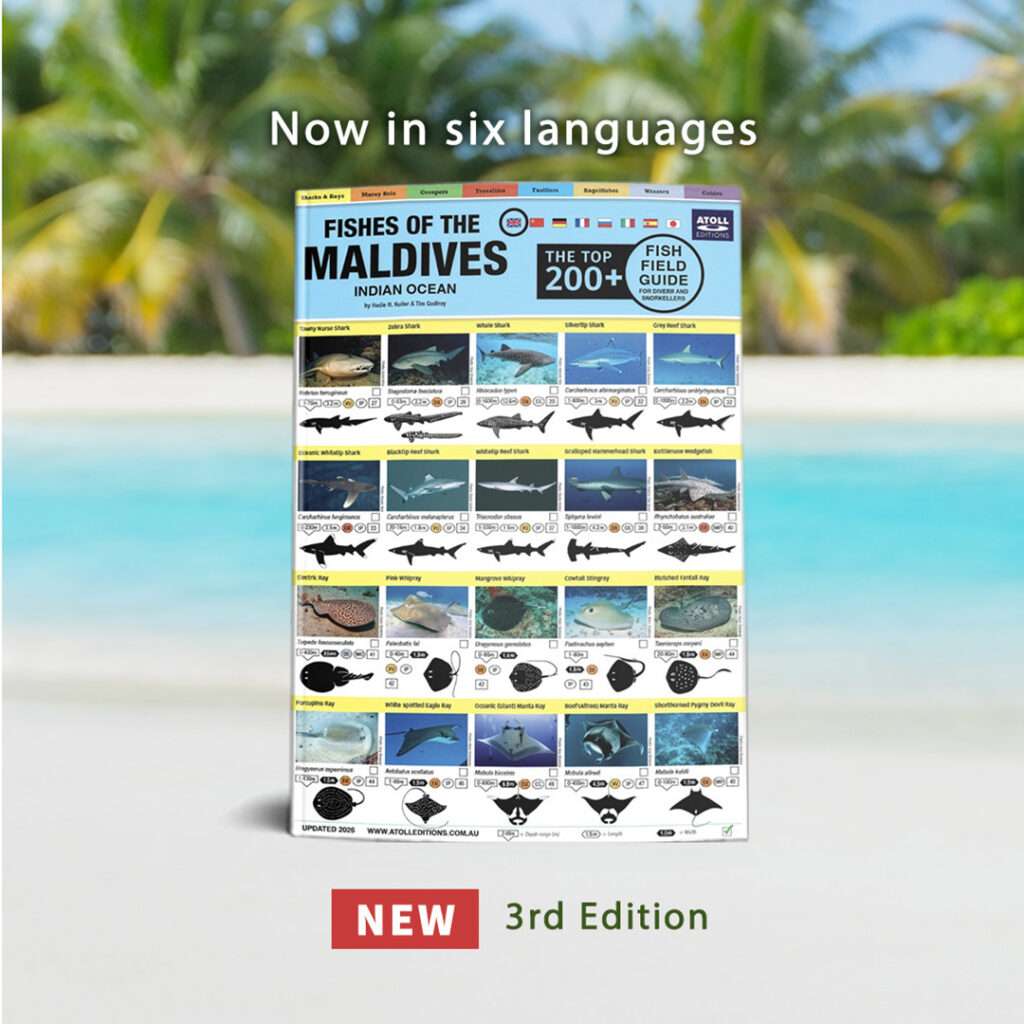
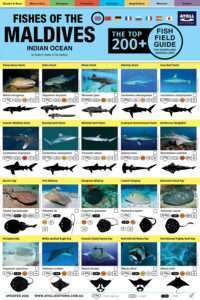
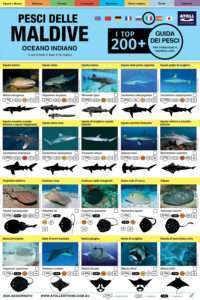
Designed specifically for the boat and the beach, this brand-new third edition is the ultimate companion to the main volume. Compact and easy to use, the fold-out guide features silhouettes, depth ranges, and a handy checkbox system to record your sightings right after a dive. To make it accessible to even more divers, it is now available in six languages: English, German, Spanish, French, Italian, and Russian.
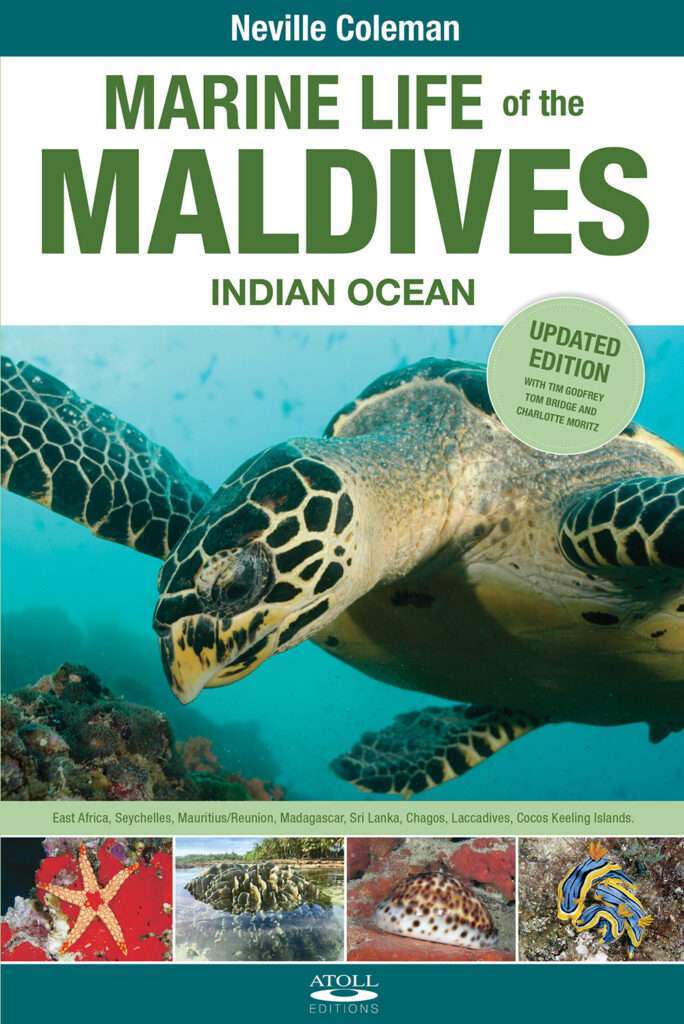
Back by Popular Demand: Marine Life of the Maldives
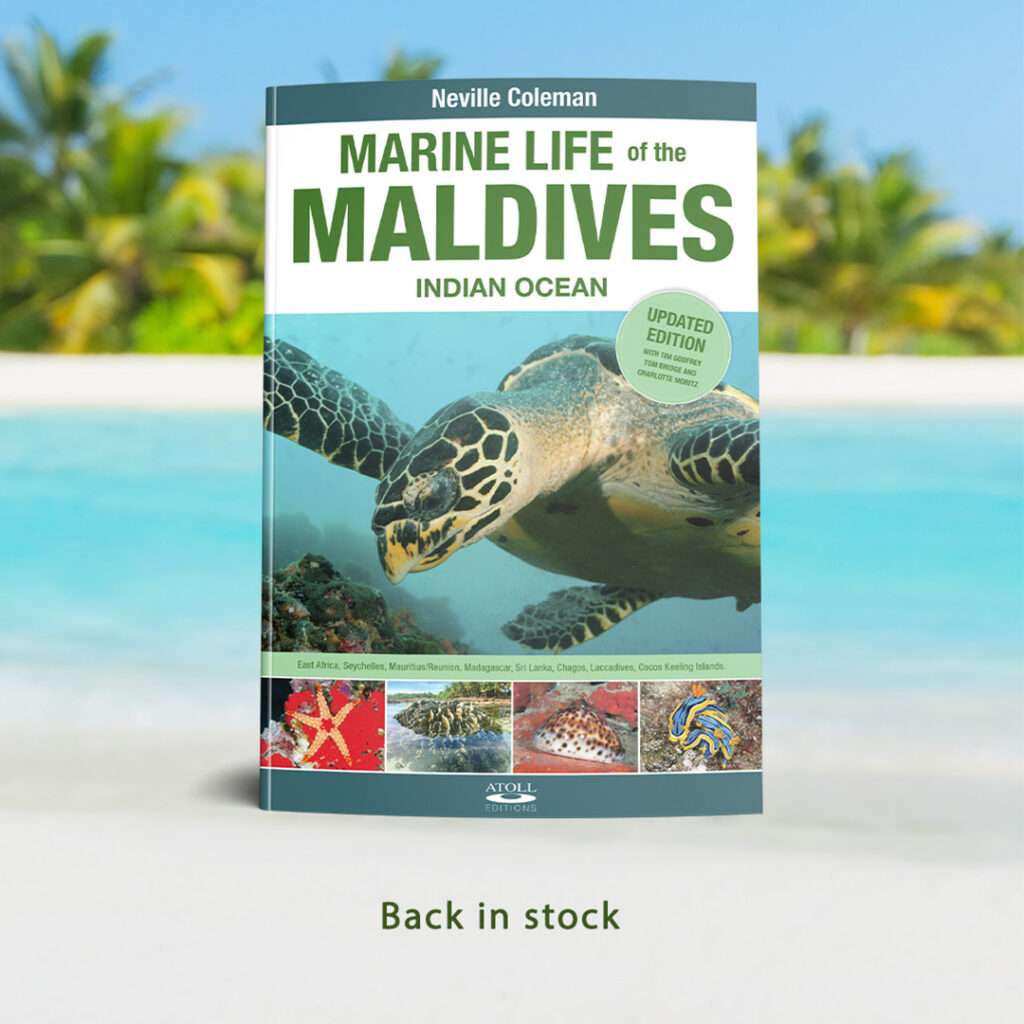
To complete your library, Neville Coleman’s celebrated Marine Life of the Maldives is officially back in stock. While the fish guides cover the vertebrates, this 344-page volume provides a detailed exploration of the region’s marine invertebrates, plants, mammals, reptiles, and birds. It’s a vital tool to help you recognise and appreciate the broader, extraordinary ecosystem beneath the surface.

Explore the Wider Range
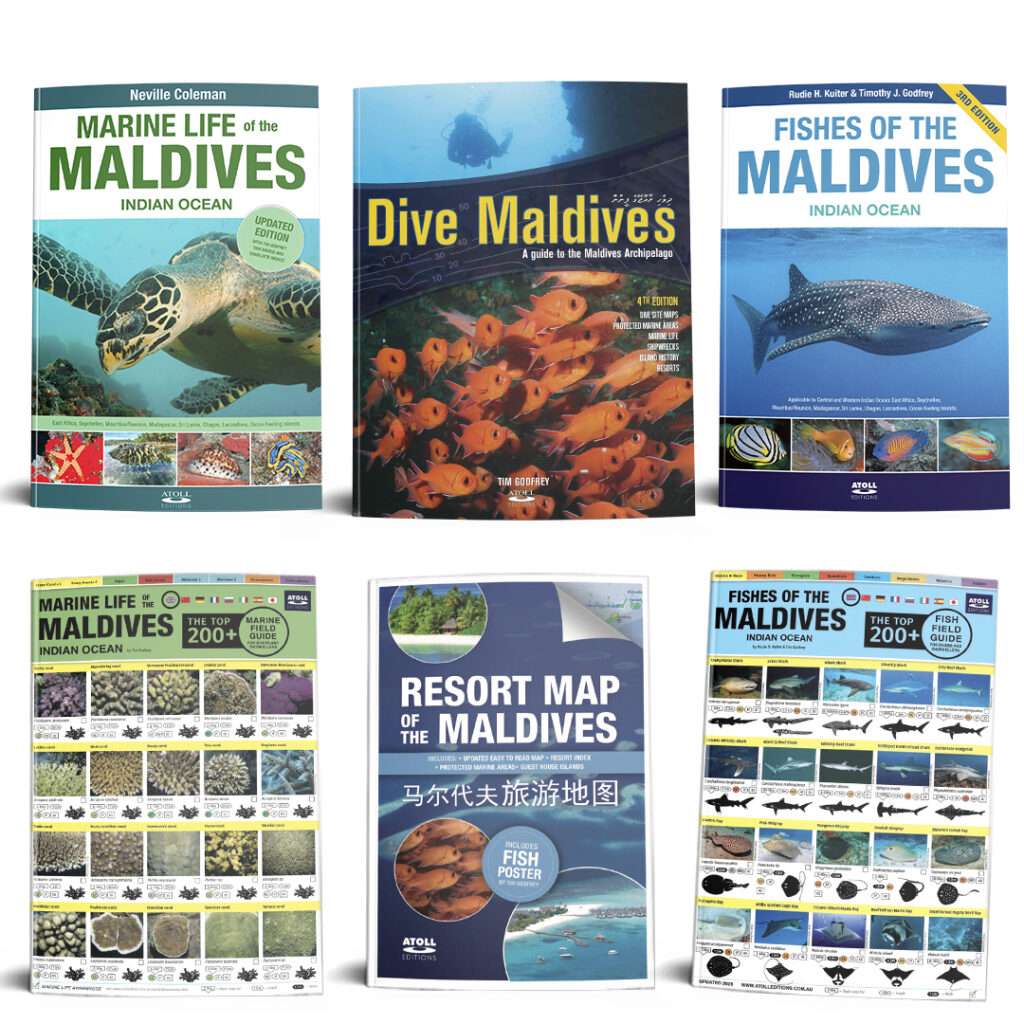
Maldives diving and marine life books

These titles are just a glimpse of what we offer for Indian Ocean explorers. From detailed archipelago dive guides to resort maps, we have everything you need to plan your next underwater adventure.
Posted on Leave a comment

Major Updates to our Maldives Range Arriving This Spring

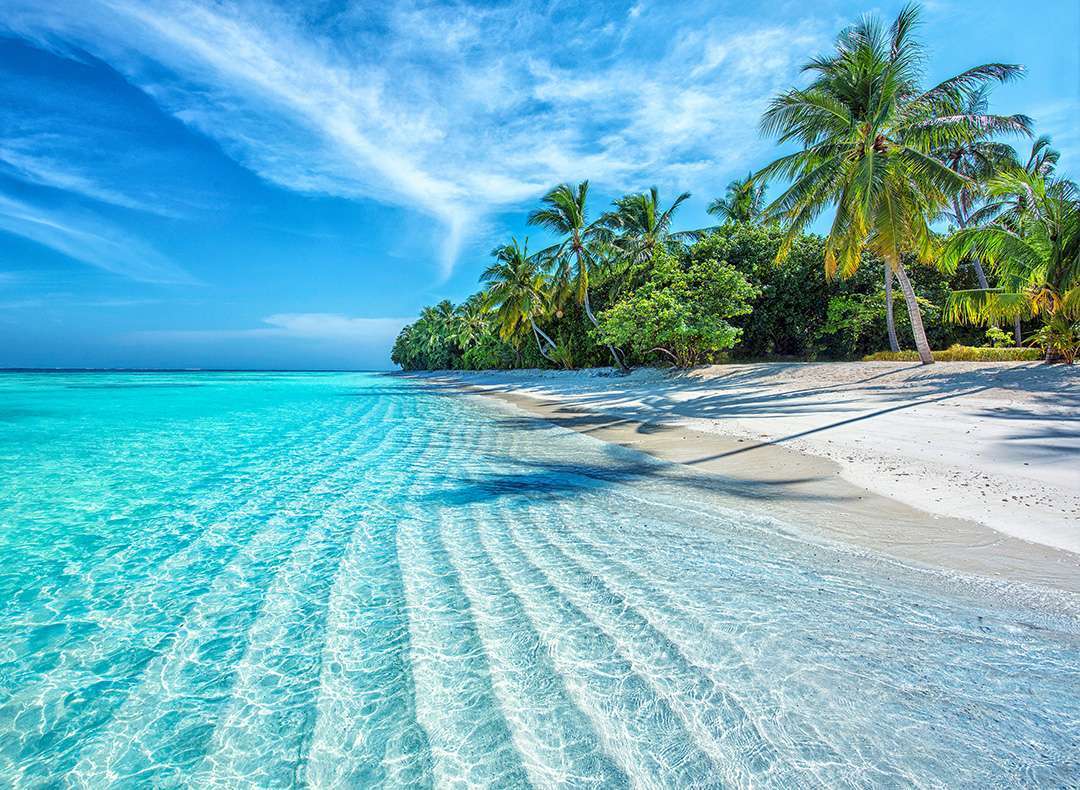
Paradise beach scene in the Maldives

We are pleased to announce a significant update to our Maldives reference collection, just in time for the new diving season.

Whether you are planning a trip or simply updating your reference library, three of our key titles are currently being reprinted with major updates and are available for pre-order now (anticipated shipping late March onwards).

1. Fishes of the Maldives (New 3rd Edition)

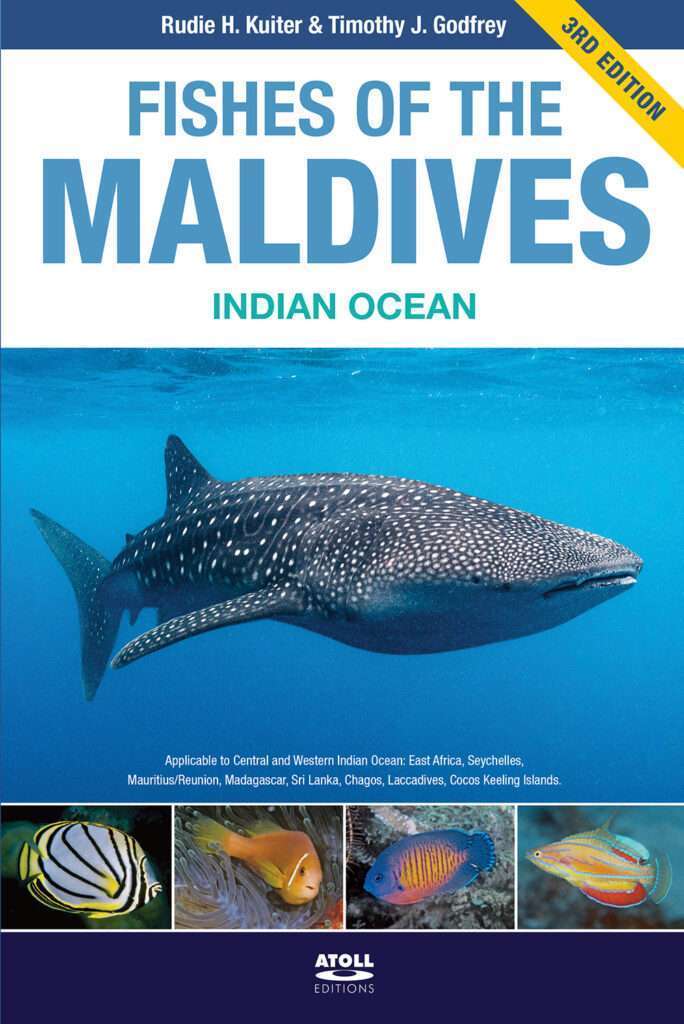
Fishes of the Maldives - 3rd Edition (2026)

The standard reference work has been fully revised. The new 3rd Edition now includes:

  • Expanded coverage of sharks and rays.
  • Updated IUCN Red List status for all species.
  • The latest scientific classification changes.

2. Maldives Fish Field Guide

Maldives Fish Field Guide

Our “Top 200+” pocket companion has been refreshed to match the new taxonomy of the main book, making it the perfect travel partner for quick ID on the boat.

3. Marine Life of the Maldives

Marine Life of the Maldives (Revised 2026) by Neville Coleman

The comprehensive guide to invertebrates and reef life has also received a revised reprint to ensure accuracy.

Secure Your Copies

Stock is due to arrive in late March. Pre-order now to ensure your copy is dispatched immediately upon arrival.

Posted on Leave a comment

Clever Camouflage

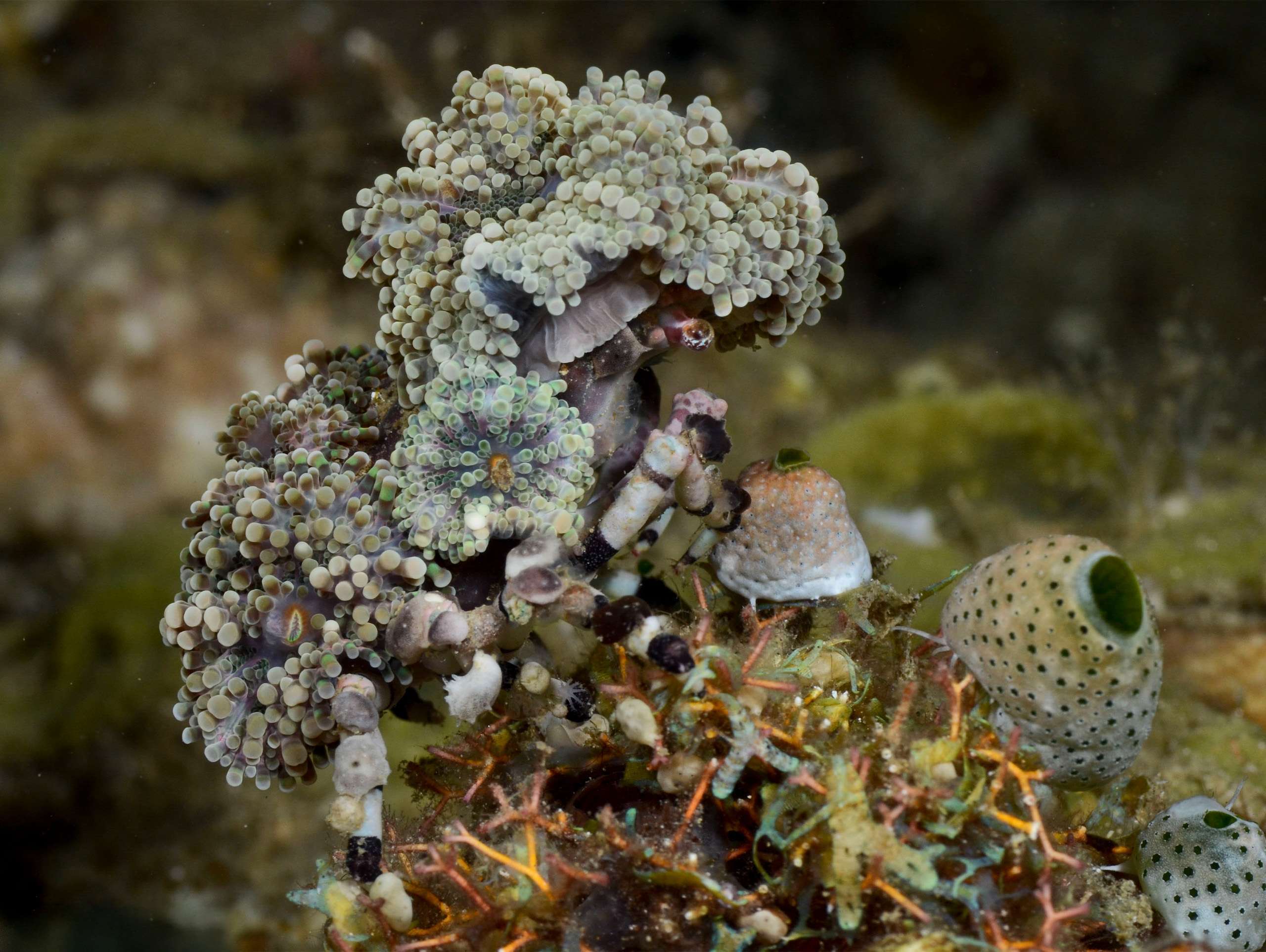
Decorator crab and Corallimorpharia

Different species of crabs have engagingly individual senses of fashion. Such decorator crabs wear hats made of sponges, pom-poms made of anemones, or full outfits of disc anemones (Corallimorpharia, a close relative of corals). However, the decorations that the decorator crab wears are anything but random.

The crab actively searches for materials that perfectly match its environment. For example, crabs living in soft corals use coral polyps to blend in seamlessly with their host. The decorating process is essentially a brilliant disguise, creating camouflage to stay safe from predators.

When decorating, the crab works with great precision. The animal grabs an object of choice and carefully attaches it to its shell or legs. Many crabs have special, hook-like structures on their bodies that act like Velcro to hold the decoration in place. Decorator crabs regularly adjust their adornments to stay perfectly camouflaged, or perhaps to choose a new disguise. When the crab moults (the process of shedding its old exoskeleton and growing a new one), the carefully gathered outfit is neatly transferred to the new shell.

Any diver who has ever spotted a decorator crab knows how astonishing they are at exploiting their environment to hide in plain sight. It’s a perfect combination of art, nature, and survival.

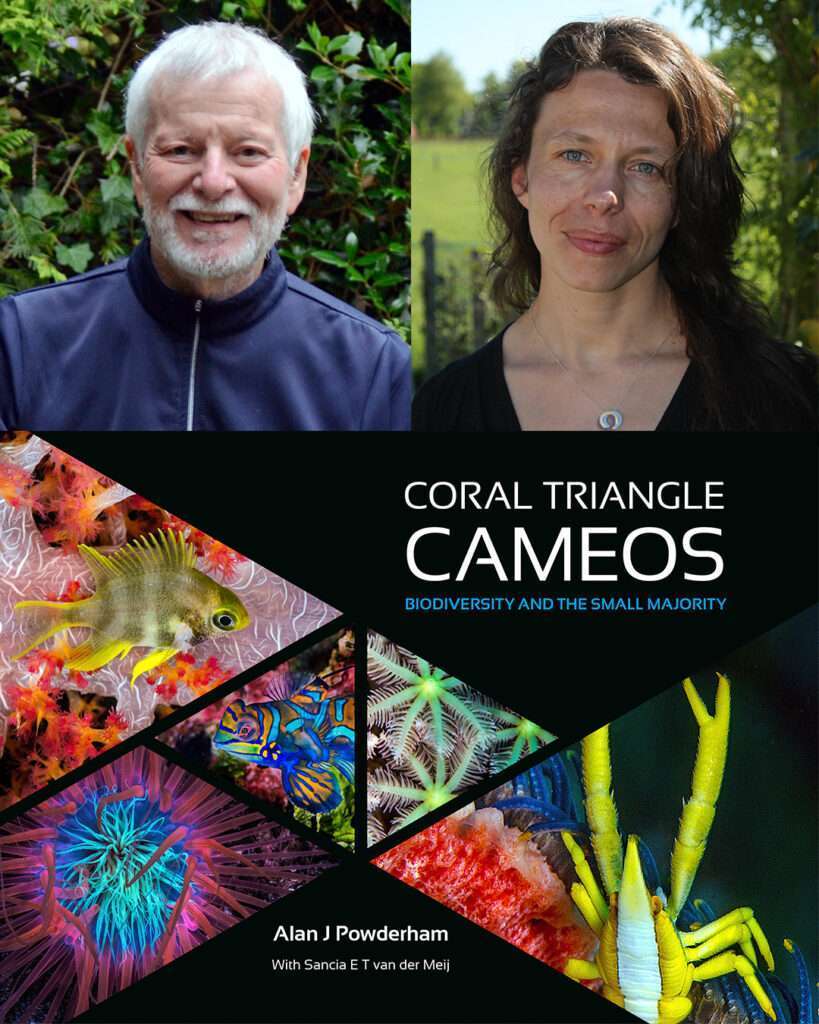
Coral Triangle Cameos authors Alan Powderham and Sancia van der Meij

Coral Triangle Cameos

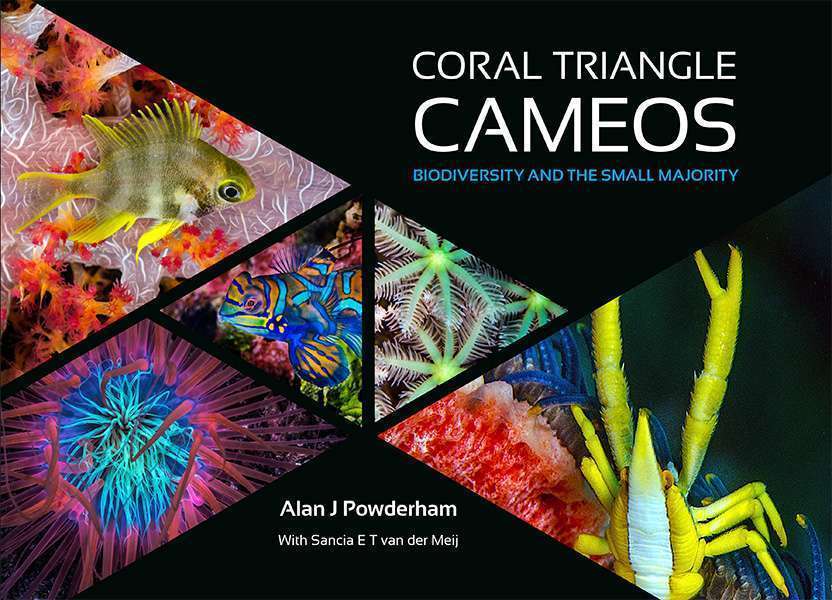
In the book Coral Triangle Cameos: Biodiversity and the Small Majority by marine biologist Sancia van der Meij and photographer Alan Powderham, the smallest fish and invertebrates from the Coral Triangle are central. These tiny inhabitants not only contribute enormously to the diversity of coral reefs, but the relationships between species also provide a good picture of the creative excesses of evolution.

The book is available through bookstores or from Dived Up Publications.
ISBN 978-1-909455-57-3

Posted on Leave a comment

Grazing on Sunlight

Costasiella kuroshimae - Shaun the Sheep sea slugs - kleptoplasty

When contemplating grazers on a coral reef, adorable little sheep probably do not leap into your imagination. Yet, there are exotic creatures that do exactly that: graze on sunlight. Some species of gill-less sea slugs, Costasiella kuroshimae, even look disarmingly similar to a tiny sheep.

These charming little slugs measure only about 5 millimetres and live on green Avrainvillea and Halimeda algae. Mind you, they are so tiny that they are far from being readily obvious. You need to know their environment and where to look. Their nickname, ‘leaf sheep’, attributes to its dark eyes and two rhinophores that stick out from the top of its head, resembling sheep ears. The leaf-like protrusions on its back, called cerata, aid in breathing. As noted in chapter 7 of Coral Triangle Cameos, these tiny exotica are also fondly known as ‘Shaun the Sheep’, after the popular animated character.

What truly makes these species of marine slugs special is their ability to perform kleptoplasty — a process in which an animal stores chloroplasts from plant cells and reuses them to derive energy from photosynthesis. In the bright, clear waters of coral reefs, these chloroplasts remain active and can maintain this process of producing energy through photosynthesis for weeks—one of nature’s smartest energy hacks.

Coral Triangle Cameos - Alan Powderham and Sancia van der Meij

Coral Triangle Cameos

In the photo book Coral Triangle Cameos: Biodiversity and the Small Majority by marine biologist Sancia van der Meij and photographer Alan Powderham, the smallest fish and invertebrates from the Coral Triangle are central. These tiny inhabitants not only contribute enormously to the diversity of coral reefs, but the relationships between species also provide a good picture of the creative excesses of evolution.

The book is available through (online) bookstores or from Dived Up Publications. ISBN 978-1-909455-57-3

Posted on 1 Comment

Deadly Embrace

Sea anemone Nemanthus annamensis. Photo: Alan Powderham.

On dark winter days, it’s lovely to daydream of adventures on colorful coral reefs. The recently published Coral Triangle Cameos: Biodiversity and the Small Majority, presents a photographic smorgasbord of the smallest fish and invertebrates of this amazingly diverse region. These tiny residents not only contribute enormously to the rich variation of the marine life, but their inter-relationships also offer fascinating insights to the creative expressions of evolution.

A chillingly beautiful example is the colonial sea anemone Nemanthus annamensis, known by the suggestive English name “gorgonian wrapper.” This anemone forms colonies around the branches of black corals and gorgonian sea fans. Unfortunately, it is a one-sided love affair: the coral is systematically overgrown and slowly dies under the anemone’s suffocating embrace. However, for the anemone, this parasitic form of symbiosis offers many benefits. Within the branches of the doomed corals, the anemone establishes a prime location on the reef to feed in plankton-rich currents – thus usurping the precious domain of the corals.

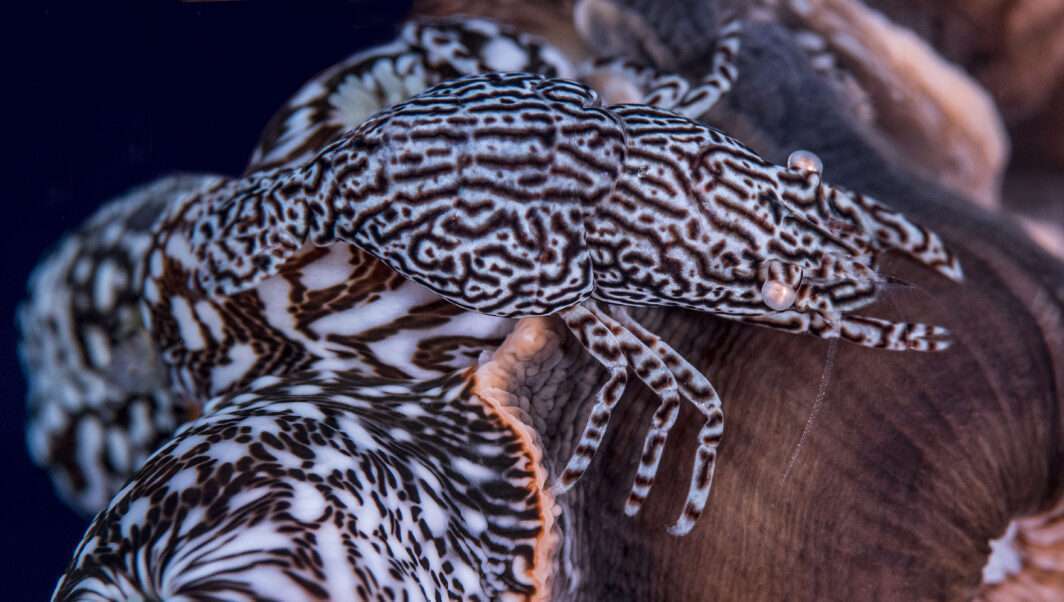
But this enforced diversity of species doesn’t end there. The anemone often hosts the symbiotic shrimp Izucaris masudai, but which is hardly noticed because it has adopted the exact same colours and patterns as its host.

Shrimp Izucaris masudai. Photo: Alan Powderham.
Coral Triangle Cameos - Alan Powderham and Sancia van der Meij

Coral Triangle Cameos

In the photo book Coral Triangle Cameos: Biodiversity and the Small Majority by marine biologist Sancia van der Meij and photographer Alan Powderham, the smallest fish and invertebrates from the Coral Triangle are central. These tiny inhabitants not only contribute enormously to the diversity of coral reefs, but the relationships between species also provide a good picture of the creative excesses of evolution.

The book is available through (online) bookstores or from Dived Up Publications. ISBN 978-1-909455-57-3