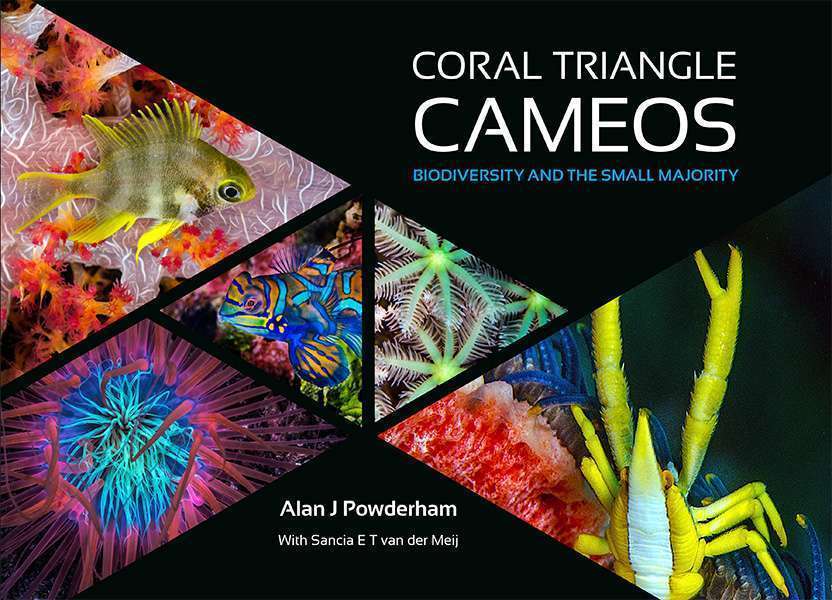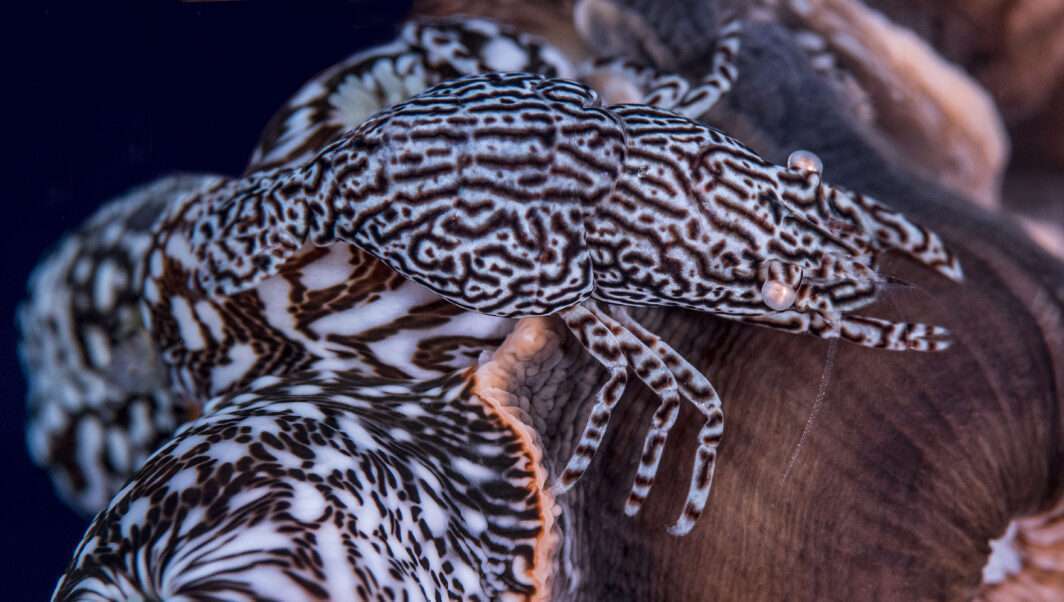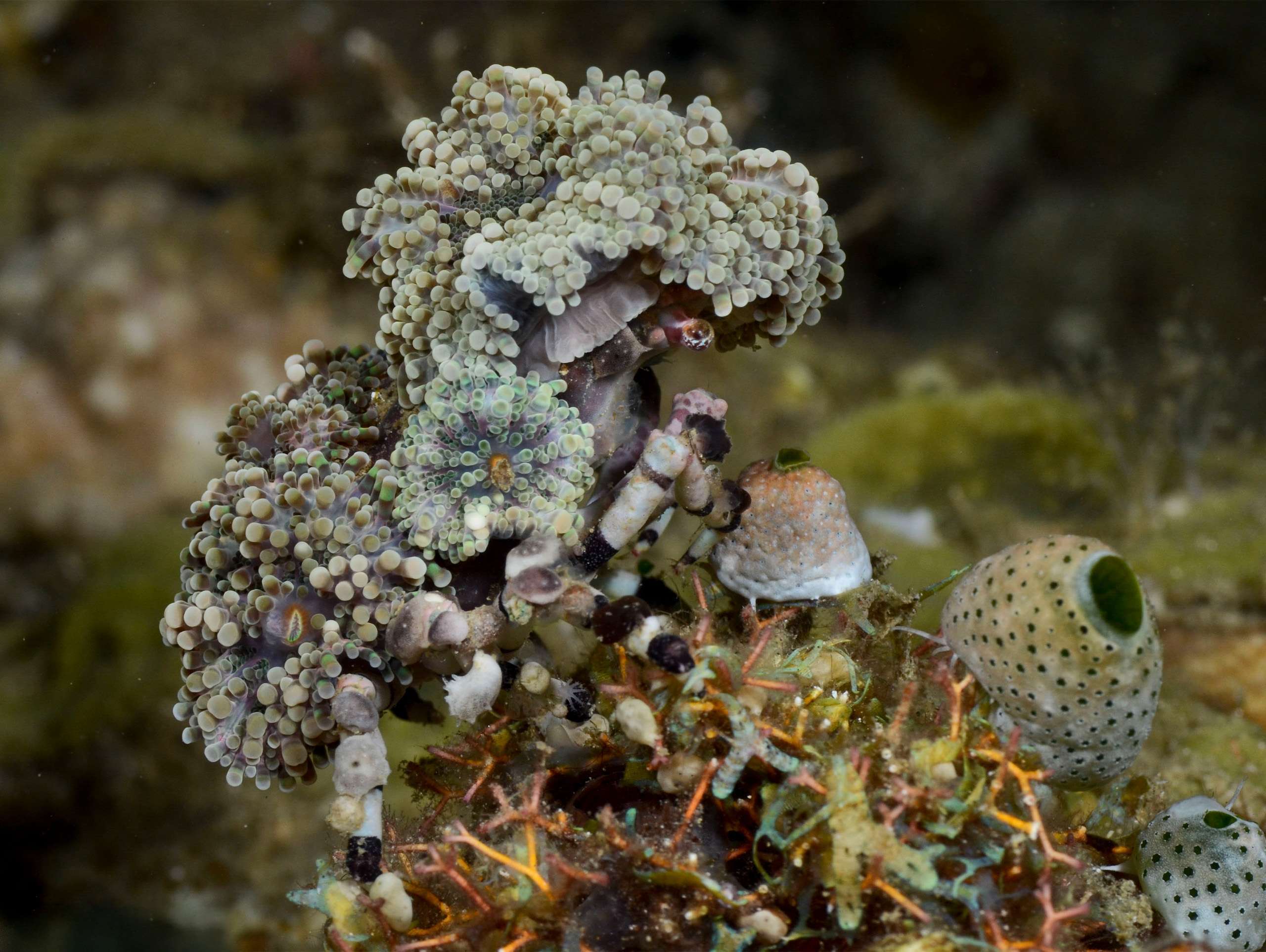
Different species of crabs have engagingly individual senses of fashion. Such decorator crabs wear hats made of sponges, pom-poms made of anemones, or full outfits of disc anemones (Corallimorpharia, a close relative of corals). However, the decorations that the decorator crab wears are anything but random.
The crab actively searches for materials that perfectly match its environment. For example, crabs living in soft corals use coral polyps to blend in seamlessly with their host. The decorating process is essentially a brilliant disguise, creating camouflage to stay safe from predators.
When decorating, the crab works with great precision. The animal grabs an object of choice and carefully attaches it to its shell or legs. Many crabs have special, hook-like structures on their bodies that act like Velcro to hold the decoration in place. Decorator crabs regularly adjust their adornments to stay perfectly camouflaged, or perhaps to choose a new disguise. When the crab moults (the process of shedding its old exoskeleton and growing a new one), the carefully gathered outfit is neatly transferred to the new shell.
Any diver who has ever spotted a decorator crab knows how astonishing they are at exploiting their environment to hide in plain sight. It’s a perfect combination of art, nature, and survival.
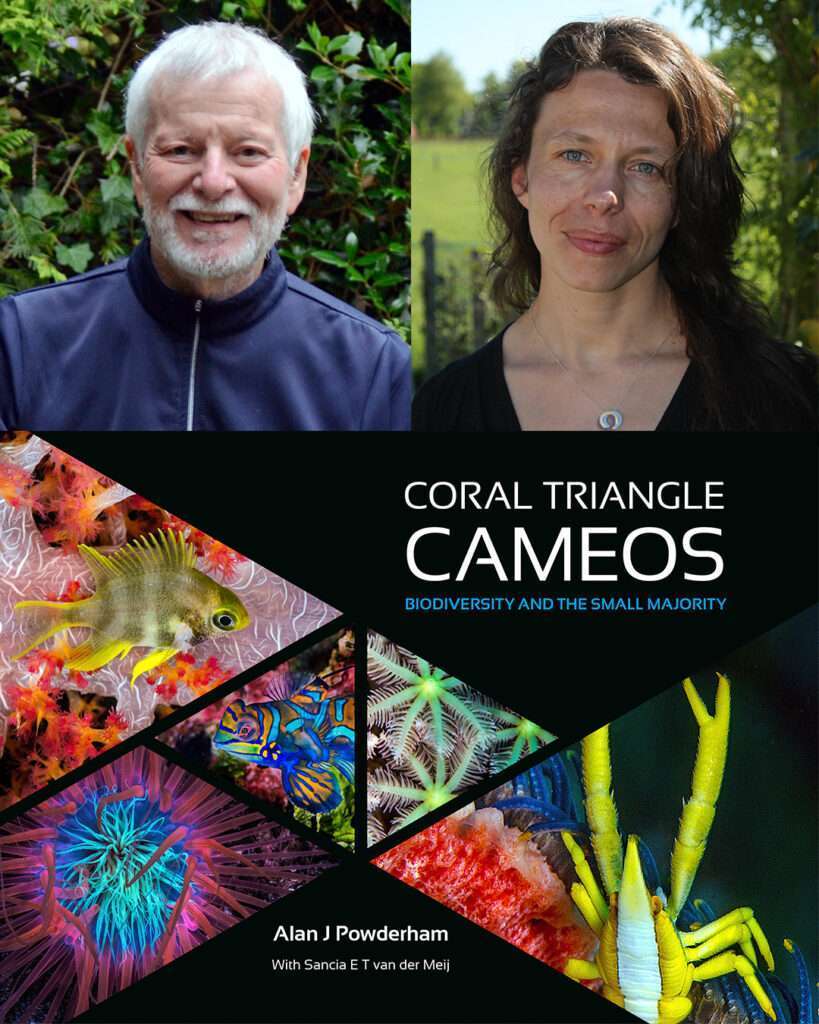
Coral Triangle Cameos
In the book Coral Triangle Cameos: Biodiversity and the Small Majority by marine biologist Sancia van der Meij and photographer Alan Powderham, the smallest fish and invertebrates from the Coral Triangle are central. These tiny inhabitants not only contribute enormously to the diversity of coral reefs, but the relationships between species also provide a good picture of the creative excesses of evolution.
The book is available through bookstores or from Dived Up Publications.
ISBN 978-1-909455-57-3